


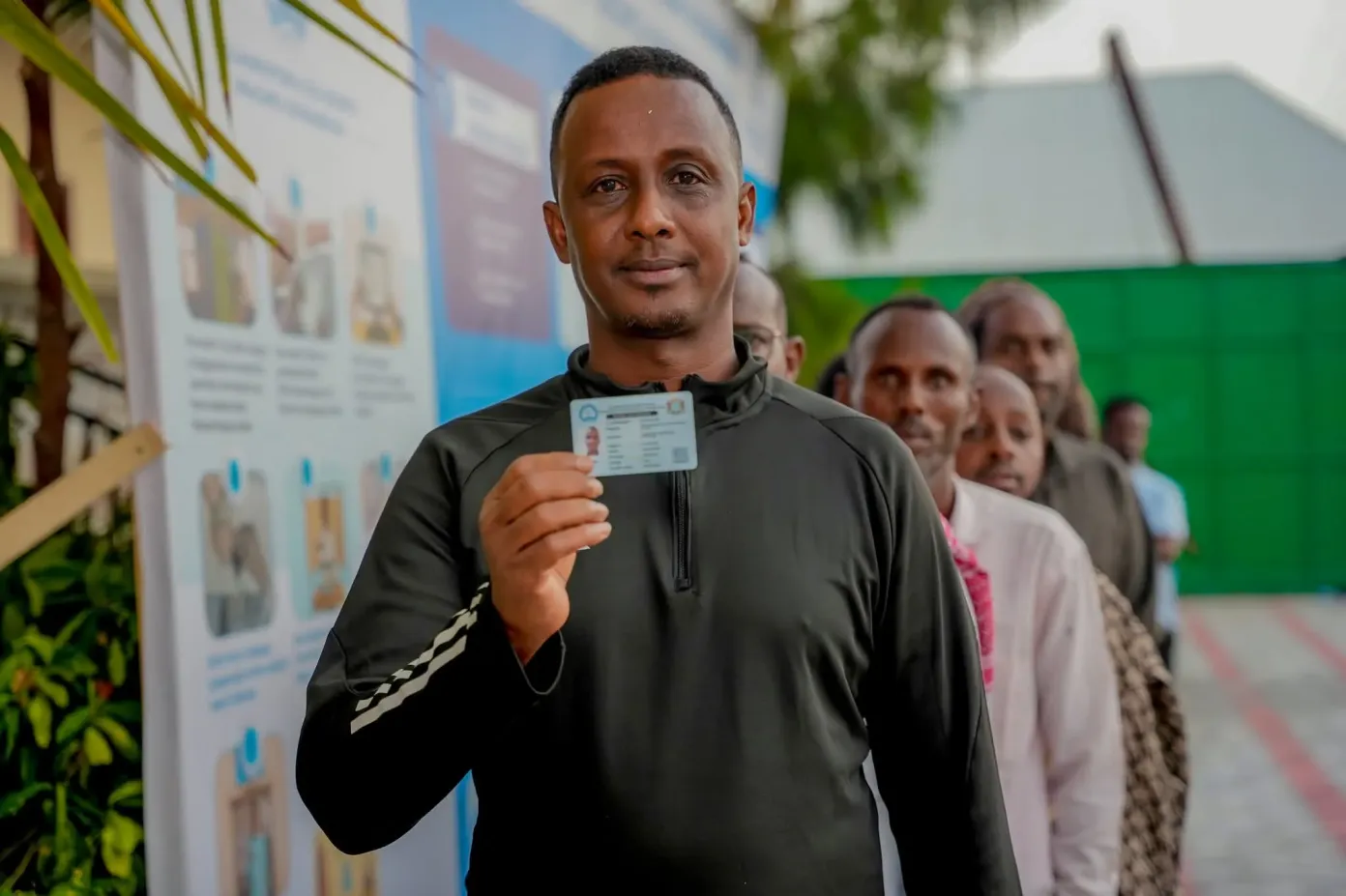
MOGADISHU, Somalia — Residents of Somalia’s capital went to the polls at dawn on Thursday in a landmark local election widely seen as a turning point in the country’s long and uneven journey toward democratic governance.
Voting began early on December 25, 2025, across Mogadishu’s 16 districts for the Benadir Regional Council elections — the first time in decades that citizens of the capital have been able to directly participate in choosing their local leadership. The polls are being held under the supervision of the National Independent Electoral Commission (NIEC).
A total of 390 council seats are being contested by 20 registered political parties and associations, with 1,604 candidates running on party lists rather than as individuals. According to the commission, nearly 919,000 voters were registered, although just over 503,000 collected their voter cards ahead of election day.
Long queues formed hours before polling stations officially opened at 6 a.m., with residents gathering as early as 3 a.m. in districts ranging from Karaan in the north to Kahda in the south. Voters described the moment as historic, saying they were determined not to miss a rare opportunity to have a direct say in how their neighborhoods are governed.
“This is something we have waited for our entire lives,” one voter said near a polling center in Hodan district, echoing a sentiment heard across the city.
Security has been placed on the highest alert, with Somali police and other security forces deployed heavily around polling stations and major roads. Armored vehicles were visible across the capital, and Aden Adde International Airport was temporarily closed as part of the security operation. Authorities said the measures were intended to prevent any disruption amid the ongoing threat posed by the al-Qaeda-linked group al-Shabaab.
President Hassan Sheikh Mohamud urged citizens to turn out in large numbers, calling the vote a critical step toward accountable local governance. Until now, Mogadishu’s mayor and district leadership were appointed by the federal government rather than elected.
The election follows decades of indirect political systems introduced after Somalia’s state collapse in 1991, under which clan elders selected lawmakers, who in turn chose national leaders. Observers say the Benadir vote represents a move away from elite-driven politics toward people-centered governance at the grassroots level.
However, the process has not been without controversy. Some opposition groups, including the Somali Salvation Forum, boycotted the election, raising concerns about political consensus and the pace of electoral reforms. Critics also argue that security conditions and logistical challenges could undermine broader national elections.
Despite those concerns, many analysts view the Benadir council elections as a test case for Somalia’s future. A law passed in 2024 restored universal suffrage, and successful local elections in Mogadishu could pave the way for wider direct elections, including parliamentary polls expected in 2026.
While the vote is unlikely to resolve Mogadishu’s deep-rooted challenges overnight, it marks a significant moment for a city — and a country — long deprived of direct democratic participation.

