


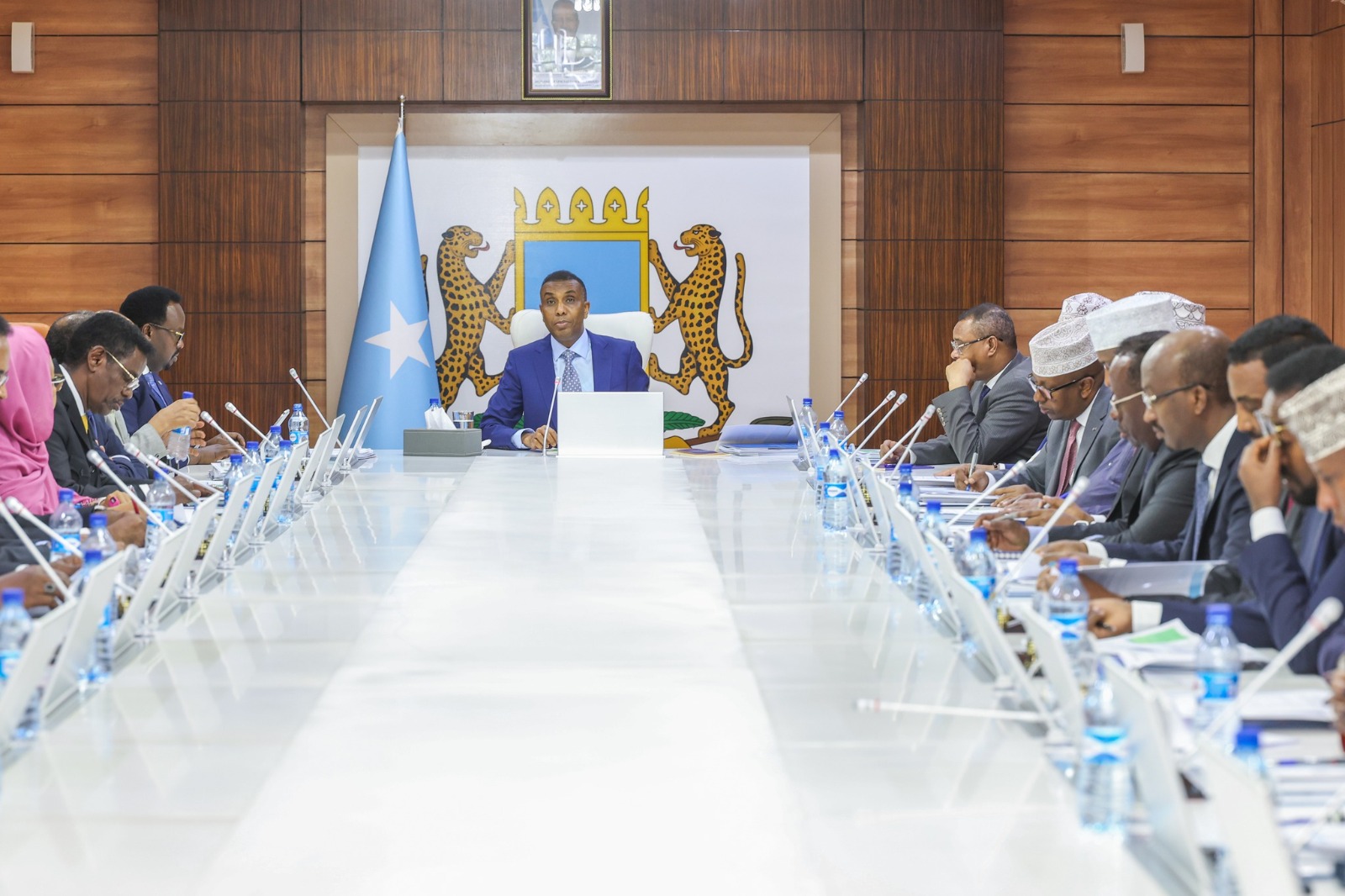
Mogadishu — The Council of Ministers of the Federal Republic of Somalia on Thursday approved a new regulatory framework establishing a National Disaster Risk Management Fund and ratified a series of maritime agreements, as the government moves to address a worsening drought and strengthen institutional capacity.
The weekly cabinet meeting, chaired by Prime Minister Hamza Abdi Barre, reviewed reports detailing severe water shortages and food insecurity affecting vulnerable communities across the country. Officials said the government is finalizing urgent measures to mitigate the humanitarian impact and support affected populations.
To institutionalize disaster response, ministers approved regulations for the National Disaster Risk Management Fund, designed to unify preparedness, prevention, and response mechanisms for both natural and man-made disasters. The framework aims to strengthen coordination between federal institutions and communities, and to promote a sustainable, self-reliant approach to future crises.
The cabinet also ratified a memorandum of understanding on maritime transport cooperation with Turkey, a move officials said would support trade logistics and port operations while reinforcing Somalia’s maritime sovereignty.
In addition, ministers adopted several international maritime conventions to align Somalia with global standards, including the Maritime Labour Convention (2006), the Nairobi International Convention on the Removal of Wrecks (2007), and the International Convention on Tonnage Measurement of Ships (1969). The approvals are intended to improve safety, labor conditions, and regulatory oversight in Somalia’s maritime sector.
The session concluded with a briefing from the National Committee on Combating Smuggling and Human Trafficking, which warned of escalating risks faced by Somali youth involved in irregular migration, including death, detention, and human rights abuses. Officials emphasized that combating trafficking remains critical to protecting the country’s human capital and long-term development.

