


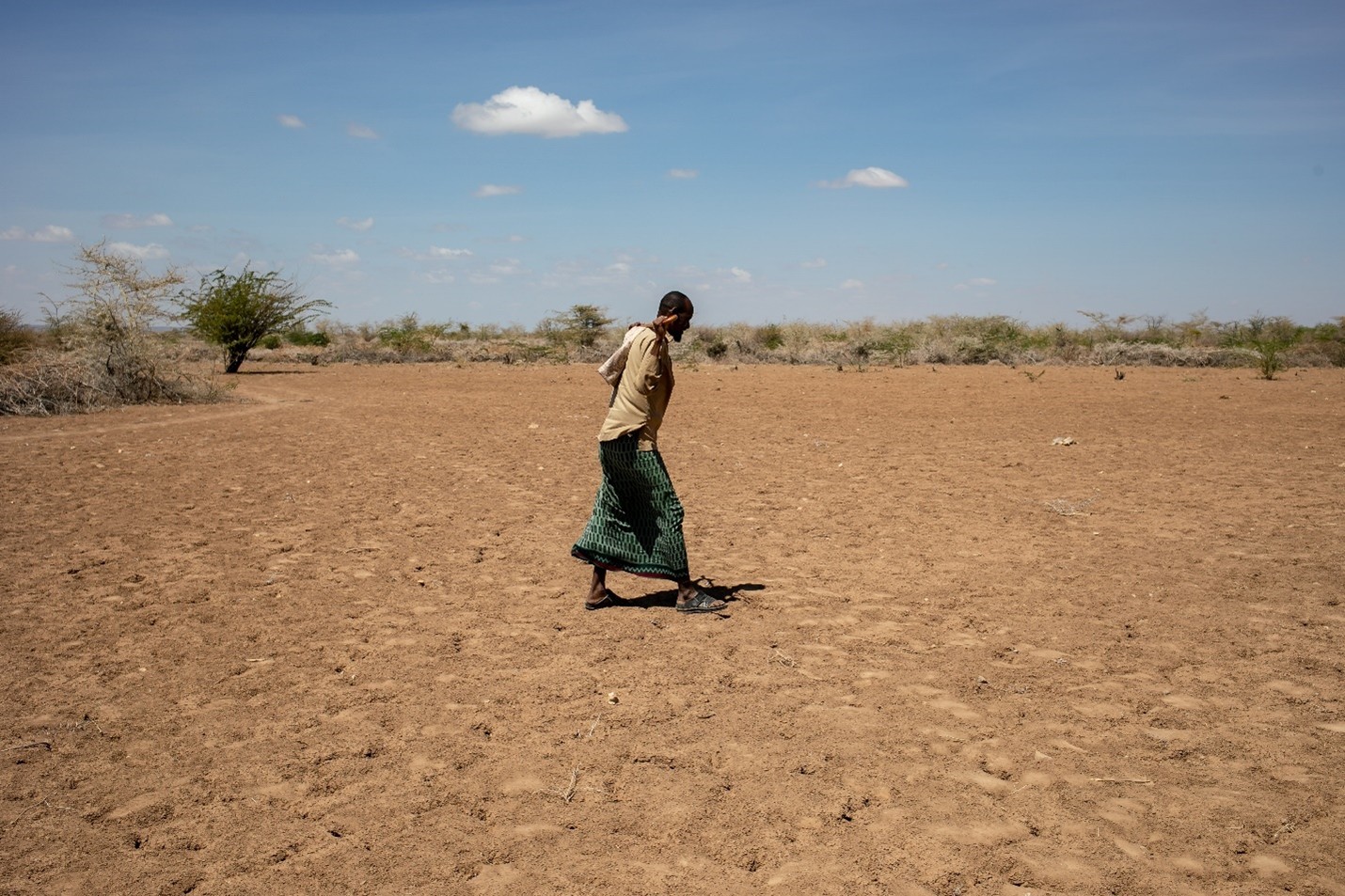
Somalia’s worsening drought has displaced at least 120,000 people in recent months, as prolonged dry conditions continue to strain livelihoods and basic services across the country, according to the United Nations Office for the Coordination of Humanitarian Affairs (OCHA).
In its 2025 Drought Emergency Situation Report No. 2, released on December 21, OCHA said extended dry weather between September and December forced families to abandon their homes in search of water, grazing land, and essential services. The crisis has affected an estimated 4.61 million people nationwide—nearly a quarter of Somalia’s population.
The hardest-hit areas include parts of Galgaduud, Mudug, Bari, and Nugaal regions, where severe water shortages, livestock deaths, and rising food prices have significantly undermined pastoral and farming livelihoods. OCHA reported that at least 170 boreholes and shallow wells have become non-functional, including 71 in Galgaduud and Mudug and 66 in Bari and Nugaal, sharply limiting access to clean water for communities and pastoralists.
The drought follows below-average rainfall during both the April–June Gu and October–December Deyr rainy seasons. Conditions are expected to deteriorate further during the January–March dry period, with the next rainy season not anticipated until April 2026.
Beyond livelihoods, the drought is also disrupting education. More than 75,000 students across Somalia have dropped out of school as families are displaced or struggle to meet basic needs.
Despite the growing scale of the emergency, humanitarian funding remains critically low. Somalia’s 2025 humanitarian response plan requires $1.4 billion, but only about $370 million has been secured so far, leaving major gaps in life-saving assistance.
To support initial response efforts, the UN Emergency Relief Coordinator has allocated $10 million from the Central Emergency Response Fund (CERF), aiming to assist more than 603,000 people through cash assistance, water rehabilitation, and livestock support. However, OCHA warned that significantly more resources are urgently needed to prevent further displacement, worsening food insecurity, and avoidable loss of life.
Humanitarian agencies cautioned that without additional funding and sustained rainfall, the drought’s impact is likely to intensify in the coming months, placing even greater pressure on already vulnerable communities across Somalia.

