


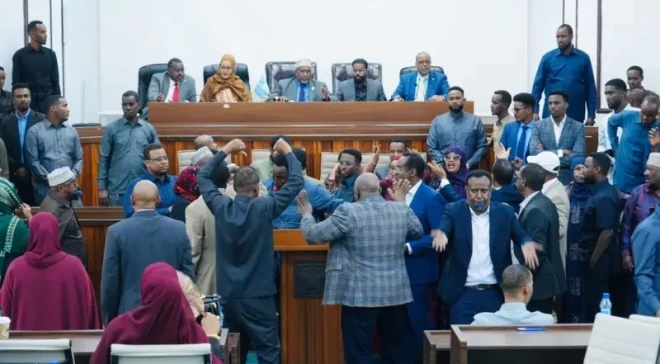
Mogadishu — The leadership of Somalia’s House of the People has suspended 19 lawmakers for allegedly disrupting parliamentary proceedings, as political tensions escalate over proposed constitutional amendments.
In an official decree issued by Acting Speaker and Second Deputy Speaker Abdullahi Omar Abshirow, the lawmakers were barred from attending the next 12 consecutive sessions of both the Lower House and joint parliamentary sittings, effective February 7, 2026.
The decision stems from an incident on February 2, when the suspended members were accused of attempting to obstruct a joint session of Somalia’s Federal Parliament. According to the Speaker’s office, their conduct violated parliamentary bylaws and threatened the order, safety, and dignity of the legislature.
The decree cited provisions in the House Internal Regulations — specifically Articles 14, 16, and 28 — which grant parliamentary leadership the authority to enforce discipline and maintain order. The suspension followed a review of reports submitted by the parliamentary Sergeant-at-Arms.
Security agencies within Parliament have been instructed to enforce the ruling and prevent the suspended lawmakers from entering the chambers during the disciplinary period.
The suspended MPs are: Abdirashid Mohamed Hidig, Mohamed Jaamac Mursal (Geele), Abbas Ali Ibrahim, Ali Mahdi Mohamed (Qalato), Nasra Mahdi Arale, Ali Haji Dahir Saleban, Abdirashid Jire Khalinle, Mariam Aweis Jama, Faduma Farah Adan (Faduma Nine), Said Ali Muse, Ifrah Mohamed Awed, Faisal Ahmed Mohamud, Yusuf Mohamed Ismail (Barakaale), Ahmed Osman Ibrahim (Daqare), Yusuf Hussein Ahmed (Gama-diid), Daud Abdikarim Sh. Omar, Khadra Ahmed Mohamud, Hassan Hurre Ugas, and Mohamed Abdirahman Nadif.
The latest suspensions follow a similar move earlier this month, when 18 lawmakers were barred from sessions over disruptions during a January 28 sitting.
The disciplinary actions come amid growing political friction over proposed constitutional amendments, which have drawn opposition from several lawmakers, political groups, and federal member states including Puntland and Jubbaland. Critics argue the changes could weaken Somalia’s federal structure, while the federal government maintains they are necessary to finalize long-delayed constitutional reforms and improve governance.
Parliament has recently experienced repeated disruptions, reflecting broader political strains linked to electoral delays, federal–state relations, and debates over the future structure of Somalia’s political system.

