


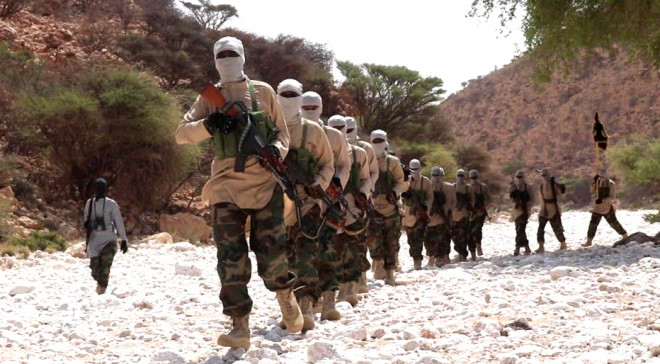
Since the start of 2025, U.S. forces have carried out 51 airstrikes in Somalia by mid-July — averaging two strikes per week. This sustained military campaign reflects Washington’s broader commitment to counterterrorism and regional stabilization in the Horn of Africa.
According to a report by terrorism analyst Pearl Matibe, published on defenceWeb, the strikes were conducted in close cooperation with Somalia’s Federal Government, signaling a strategic shift toward a “forward defense” doctrine that also respects Somalia’s sovereignty.
Data from U.S. Africa Command (AFRICOM) reveals a clear trend:
32 of the strikes targeted ISIS-Somalia, while 19 targeted al-Shabaab.
This represents a notable pivot in U.S. priorities, with ISIS-Somalia now receiving heightened attention as a growing and internationally ambitious threat, particularly entrenched in the Bari region of Puntland.
AFRICOM has explicitly stated that most of the airstrikes were carried out at the request of the Somali government, reinforcing the legitimacy of these operations.
Another noticeable shift is the geographical focus of U.S. strikes, which are increasingly concentrated in the northeastern areas near the port city of Bosaso. Intelligence suggests ISIS-Somalia has been actively establishing military camps and intelligence hubs in the region — prompting the U.S. to intensify its response.
In parallel, the U.S.-Somalia military partnership is deepening. AFRICOM commander General Michael Langley has held multiple high-level meetings with President Hassan Sheikh Mohamud and senior Somali officials, aimed at accelerating joint efforts in combating extremist groups.
Taken together, these developments show that the U.S. is shifting its counterterrorism focus from al-Shabaab to ISIS-Somalia, signaling both an evolution in threat perception and a recalibration of strategic priorities in the region.

