


The Federal Government of Somalia has formally declared its position regarding the international coordination structure known as C6+, which has been in use since 2010 to align global support for Somalia’s recovery and development.
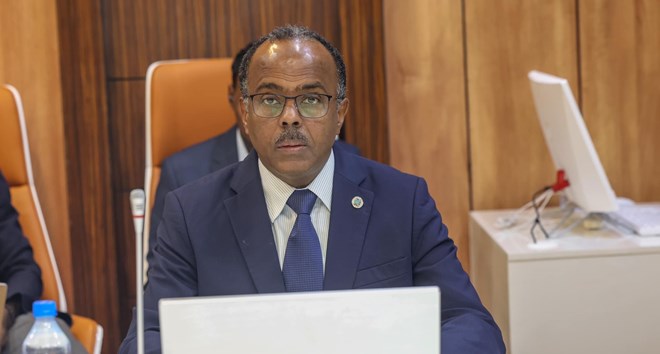
In an official letter addressed to the United Nations Special Representative for Somalia, Somalia’s State Minister for Foreign Affairs, Ali Omar (commonly known as Ali Balcad), stated that the Somali government now views the current C6+ framework as outdated and out of touch with the country’s present-day reality.
“Today, Somalia is a sovereign nation with fully functioning constitutional institutions, a matured democratic process, and a national vision rooted in peace and development. We are no longer in a transitional phase,” said Minister Ali Balcad.
He emphasized that maintaining a coordination structure heavily driven by external actors undermines the legitimacy, independence, and credibility of Somalia’s national institutions. Therefore, he urged the international community to phase out the C6+ approach and instead embrace a new model of partnership that reflects the country’s progress and current needs.
“The Federal Government of Somalia is ready for a genuine partnership based on mutual respect, proper representation, and shared interests. It is time to re-evaluate the framework of international cooperation,” the Minister added.
While reaffirming Somalia’s commitment to continued collaboration with international partners, Minister Balcad stressed that such partnerships must recognize and align with Somalia’s sovereignty and the progress the government has achieved.
This declaration comes amid reports of growing international concern over how Somalia is addressing its internal political disputes. Recently, the United States opposed the Somali government’s proposed election model, arguing that it lacked national consensus and would not be recognized as legitimate.
The C6+ refers to a coordination platform made up of six major international actors—namely the United Nations, African Union, European Union, Intergovernmental Authority on Development (IGAD), the United States, and the United Kingdom—who have historically played a central role in shaping Somalia’s political, security, and development agenda.

