


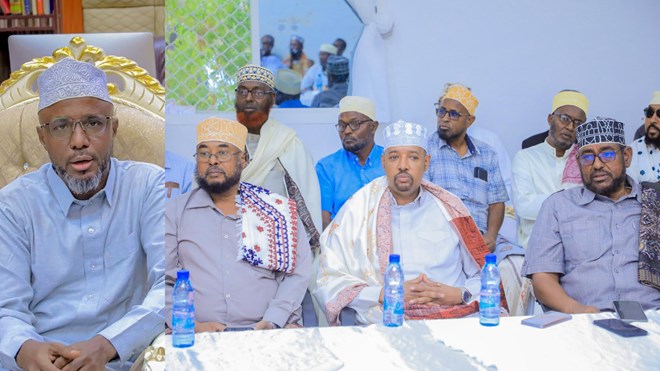
Traditional leaders (Isimmada) of the SSC-Khaatumo region are divided over a major conference aimed at finalizing the establishment of the SSC-Khaatumo regional government. The much-anticipated event is scheduled to officially open tomorrow in the city of Las Anod.
The elders have split into two camps: some support the current SSC administration, while others are aligned with opposition politicians and presidential candidates.
Speaking at a press conference in Las Anod, Garaad Jama Garaad Ali — the supreme traditional leader of the SSC territories — voiced strong objections to what he described as external interference. He emphasized that for the past 15 years, local people have lived under governance imposed from outside, a reality he said should no longer be tolerated.
“I have spent 15 years fighting against externally imposed decisions. I cannot now turn around and impose those same decisions on my own people,” said Garaad Jama. “The Warsangeli are our brothers and neighbors, we share common interests and challenges. It is not right to claim we can decide on their behalf.”
Garaad Jama also stressed that no one has the authority to override the will of the SSC-Khaatumo people. He called for a genuine national consultation process and warned against dragging the region back into the instability and suffering of the past, a situation he believes SSC would not recover from easily.
Meanwhile, SSC-Khaatumo President Abdiqadir Ahmed Ali Firdhiye held a private meeting last night with some traditional leaders from the Sool and Sanaag regions to discuss preparations for tomorrow’s conference. These elders have expressed their support for the gathering and have called for any grievances to be addressed peacefully and constructively.
SSC members of parliament also held a late-night meeting in Las Anod, debating the political disagreements surrounding the conference. So far, no official resolution has been announced from their session.
Despite ongoing preparations, concerns remain over potential security threats that could delay the conference. Some presidential candidates are staunchly opposed to its proceedings, further fueling tensions on the eve of this pivotal event.

