


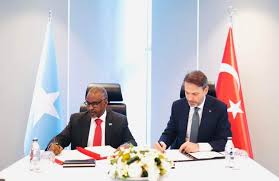
Türkiye is preparing to begin offshore oil drilling in Somalia in 2026 following the completion of extensive seismic surveys in Somali waters, according to statements by Turkish officials. The development marks a significant expansion of the growing energy partnership between Ankara and Mogadishu and could open a new chapter in Somalia’s long-discussed but largely unrealized hydrocarbons sector.
Turkey’s Minister of Energy and Natural Resources, Alparslan Bayraktar, confirmed that seismic research conducted by the Turkish Petroleum Corporation (TPAO) has produced encouraging data across three offshore blocks, each estimated at roughly 5,000 square kilometers. The surveys were carried out by the Oruç Reis research vessel, which began operations in late 2024 under military protection due to regional security risks. Bayraktar said an official announcement on the seismic findings could be made as early as January, with full drilling operations planned for 2026. He described the upcoming work as “highly complex,” noting that drilling is expected to take place at water depths of around 3,000 metres, requiring advanced deep-water technology and logistics.
The offshore work follows earlier agreements signed in April 2025, granting Türkiye exploration rights in three onshore blocks covering roughly 16,000 square kilometres. Both sides aim to start onshore drilling next year as well, though officials acknowledge difficulties, including limited road access and security concerns in several regions.
Somalia’s government has welcomed the project, hoping potential oil and gas reserves could boost revenues and reduce reliance on foreign aid. Yet analysts warn that major risks remain. Deep-water drilling is costly, the security environment is fragile, and Somalia lacks the infrastructure required for rapid development. Even if commercially viable resources are confirmed, building production and export systems could take years.
For Türkiye, the initiative strengthens its political and economic footprint in the Horn of Africa, adding an energy dimension to its longstanding military and humanitarian engagement in Somalia. Analysts describe the project as significant but caution that its success will depend on stable governance, security improvements, and transparent management of future revenues.
Both governments appear committed to proceeding, and the results of the 2026 drilling campaign may have long-term implications for Somalia’s economic future and for Türkiye’s regional strategy.

