


KISMAYO, Somalia — Jubaland on Sunday formally declared that it will operate as an independent governing authority rather than a federal member state, a move that deepens its long-running political standoff with Somalia’s federal government and adds new urgency to the country’s unresolved constitutional crisis.
The announcement followed the adoption of amendments to Jubaland’s regional constitution. In a press briefing in Kismayo, Jubaland Parliament Speaker Abdi Mohamed Abdirahman said lawmakers had removed all references to “federal member state” from the charter, replacing them with “Government of Jubaland.”
“We have enacted the amendments and removed the term from the constitution,” Abdirahman said, directing all regional institutions to begin using the new designation immediately. He made the remarks during the Eighth Jubbaland Health Conference.
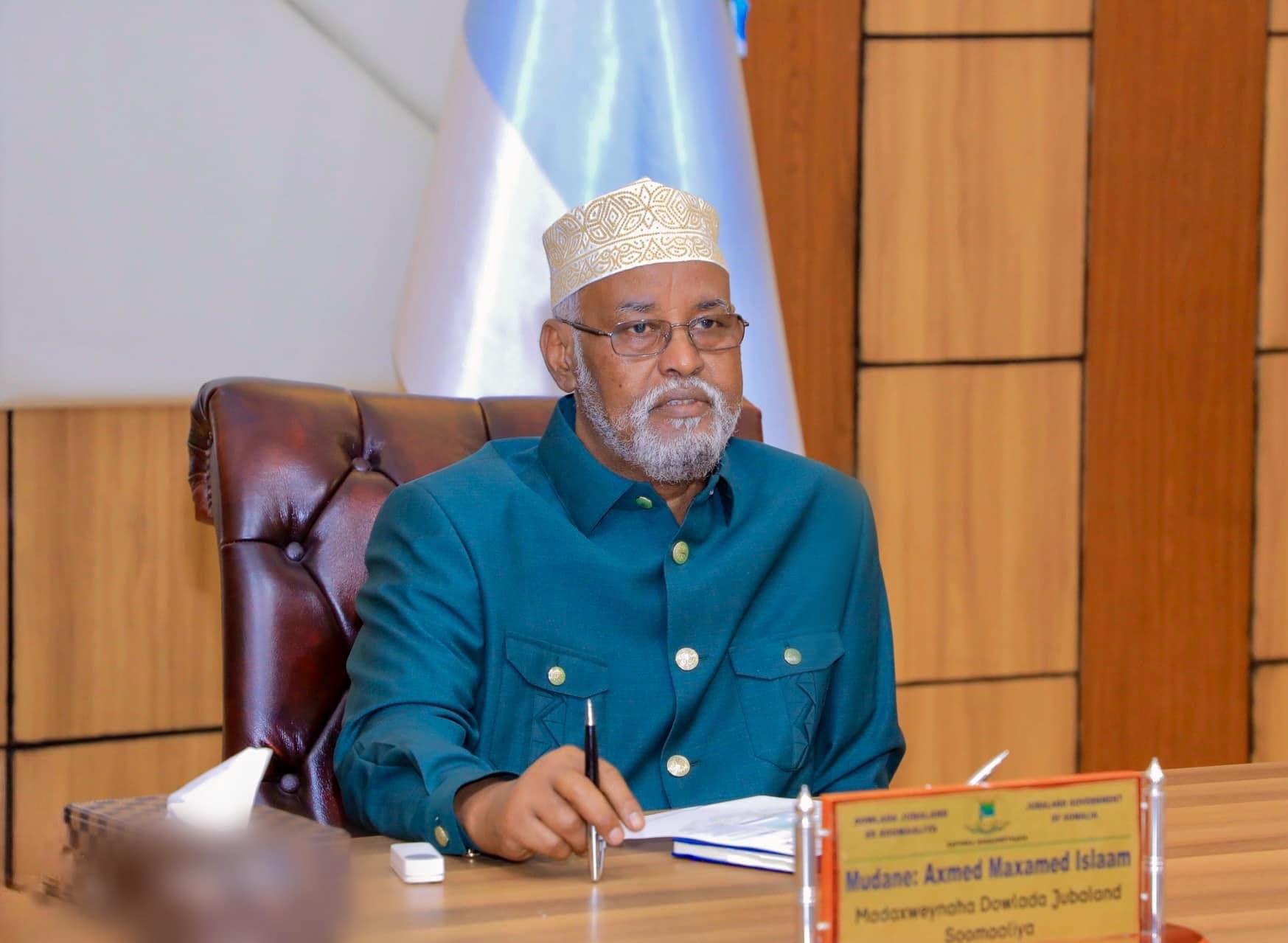
The declaration marks a significant political shift for the resource-rich southern region, which has clashed with Mogadishu repeatedly over autonomy, elections, and security control. Tensions have been especially high since November 2024, when Jubaland amended its constitution to override federal term limits. President Ahmed Mohamed Islam, known as Ahmed Madobe, subsequently secured a third term in an election the federal government labeled unconstitutional.
The dispute escalated rapidly. A Banadir court issued an arrest warrant for Madobe and sought an Interpol Red Notice, accusing him of treason and leaking classified information. Jubaland retaliated by issuing its own warrants for President Hassan Sheikh Mohamud and cutting ties with the federal government on November 28, 2024.
By late 2024 and into 2025, the confrontation had spilled into armed clashes. Jubaland forces — sometimes supported by Ethiopian units — fought Somali National Army troops in Ras Kamboni, Dolow, Bardhere, and Beled Hawo. Federal officials accused Jubaland of attacking military positions, while Jubaland claimed Mogadishu was undermining regional authority. Hundreds of Somali soldiers reportedly surrendered to Jubaland forces or fled toward Kenya during peak fighting.
The instability raised alarm in Kenya, where border communities experienced conflict spillover. Nairobi intensified mediation efforts and hosted a rare meeting between President Hassan Sheikh Mohamud and Ahmed Madobe in Kismayo in October 2025, though no breakthrough was reached.
Meanwhile, Jubaland continued expanding its administrative apparatus. In October 2025, Madobe inaugurated a new headquarters for the Jubaland Intelligence and Security Agency, calling it one of the Horn of Africa’s most advanced intelligence centers.
Sunday’s declaration also comes as Somalia grapples with a broader constitutional crisis that began in March 2024, when federal lawmakers approved amendments strengthening presidential powers and shifting the country toward universal suffrage. Puntland rejected the changes and withdrew recognition of the federal government the next day. Jubaland later aligned with opposition groups warning that the reforms could create competing legal systems and destabilize the country.
The timing of Jubaland’s announcement coincides with preparations for a major national opposition conference set to begin in Kismayo in three days. Puntland President Said Abdullahi Deni and other opposition leaders have already confirmed their attendance.
With Jubaland now openly positioning itself as a separate government, Somalia faces widening internal divisions at a moment when national coordination is critical — from finalizing a permanent constitution to maintaining pressure on al-Shabaab in Lower Juba and beyond.

