


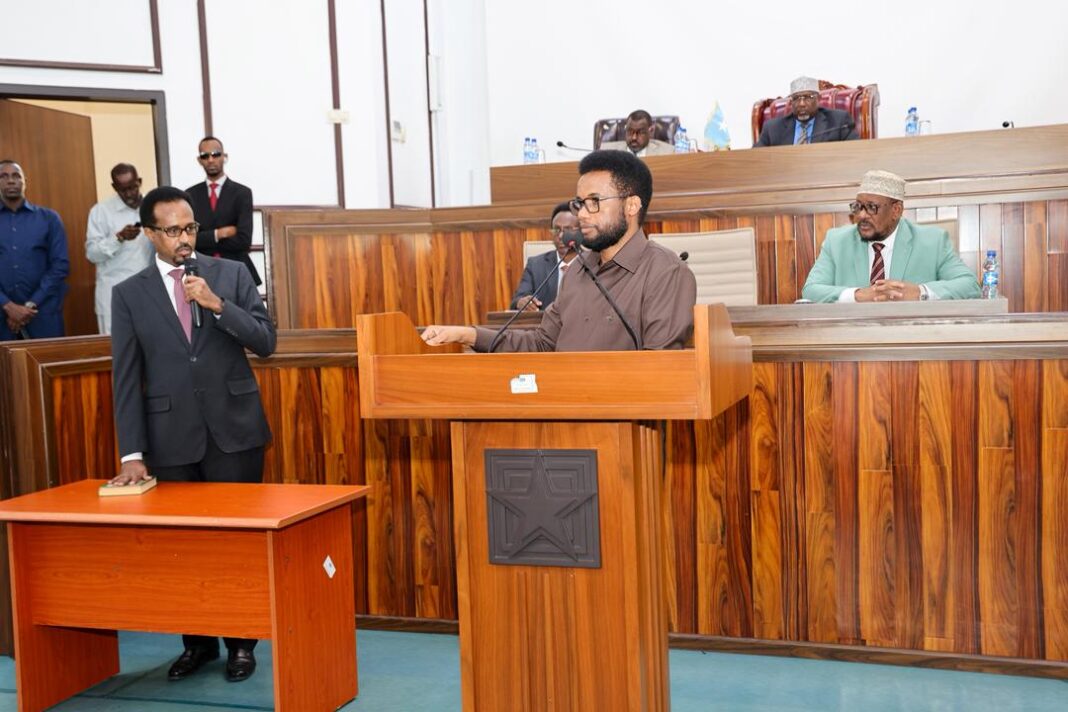
MOGADISHU — December 15, 2025 — Somalia’s House of the People held the 22nd sitting of its 7th parliamentary session on Monday, marking a significant day of legislative activity that included the swearing-in of a new cabinet minister and the introduction of two major draft laws focused on environmental governance.
The session was chaired by Speaker Sheikh Aden Mohamed Nur (Madoobe) and attended by Second Deputy Speaker Abdullahi Omar Abshirrow, along with members of parliament, at the parliament headquarters in Mogadishu.
At the opening of the sitting, the Clerk of the House, MP Mohamed Abdullahi Hassan (Nuux), administered the oath of office to Jamaal Mohamed Hassan, formally inducting him as Minister of Commerce and Industry following his recent appointment by the federal government.
After the swearing-in ceremony, lawmakers proceeded with the first reading of two draft bills submitted by the Ministry of Environment and Climate Change. The proposed legislation includes the Bill on the Establishment of the Somali Meteorology and Climate Services Agency and the Bill on the Establishment of the National Environmental Management Authority.
The Minister of Environment and Climate Change, Bashir Mohamed Jama, briefed the House on the objectives and guiding principles of the two bills, emphasizing their role in strengthening Somalia’s institutional capacity to address climate change, environmental protection, and weather forecasting.
In line with parliamentary procedures, no formal debate was held during the first reading. However, several MPs raised questions seeking clarification on the overall goals and policy foundations of the proposed laws.
Concluding the session, Speaker Sheikh Aden Mohamed Nur (Madoobe) instructed the relevant parliamentary committees to prepare the bills for second reading, during which detailed examination and debate will take place before they are returned to the full House for consideration.
The sitting highlighted Parliament’s ongoing efforts to advance legislative reforms, reinforce governance institutions, and tackle critical national priorities, particularly in the areas of environmental management and climate resilience.

