


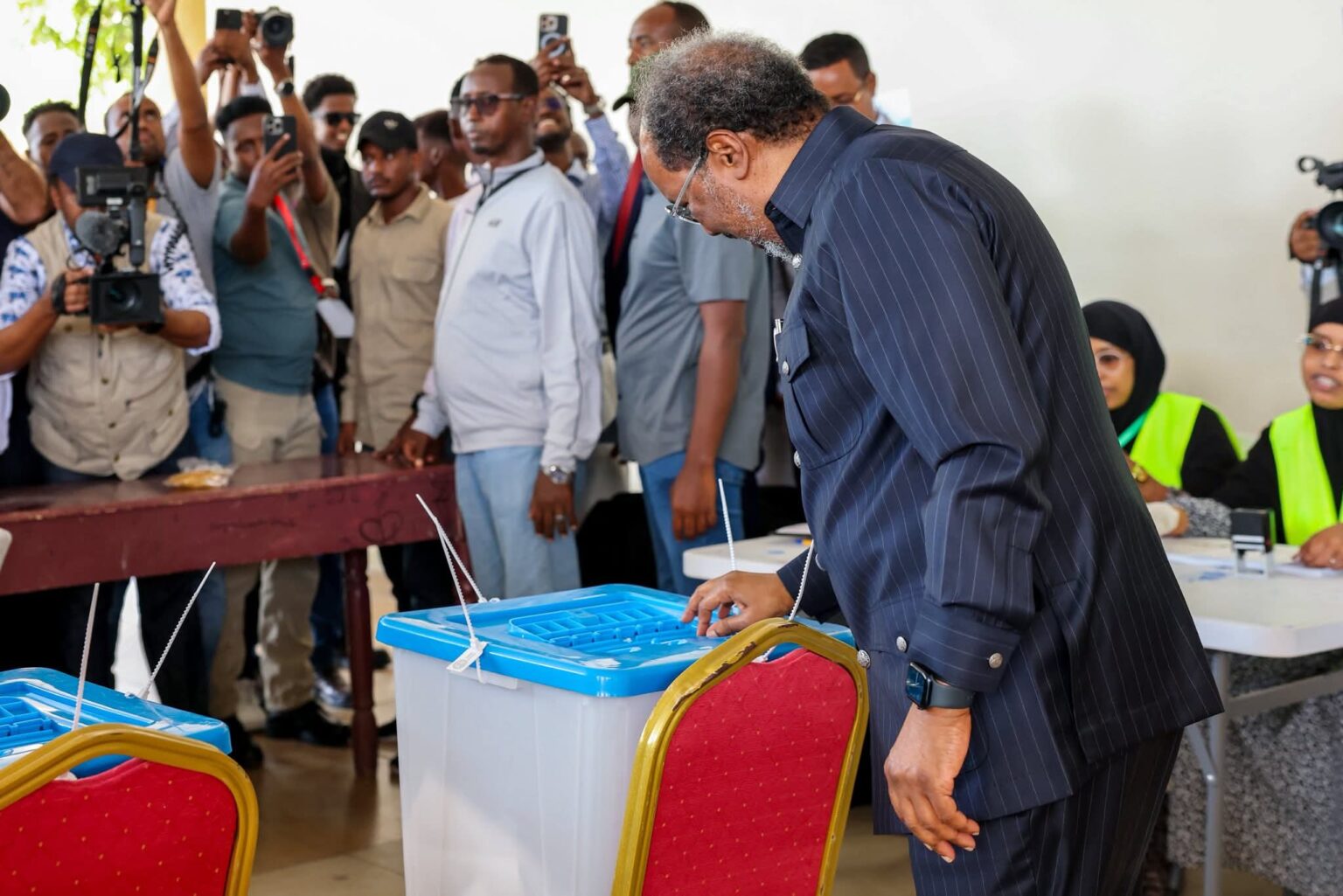
MOGADISHU, Somalia — Somalia’s President Hassan Sheikh Mohamud has urged residents of Mogadishu to take part in what he described as a historic and defining moment for the country, as the capital on Thursday held its first one-person, one-vote local council elections in more than 57 years.
Voting began on December 25, 2025, across Mogadishu’s 16 districts, allowing residents to directly elect members of the Banadir Regional Council for the first time since 1969. Around 20 political organisations are contesting the polls, which are widely seen as a milestone in Somalia’s long and fragile journey toward democratic governance.
In a nationally televised address ahead of the vote, President Hassan Sheikh said the elections symbolize Somalia’s democratic recovery and improving security situation. “This election carries immense meaning for our nation, our people, and our democracy,” he said, calling on all registered voters who collected voter cards to turn out in large numbers and exercise their constitutional right peacefully.
The president stressed that the polls demonstrate Mogadishu’s readiness for direct democratic participation after decades of indirect political systems. He also warned against intimidation or any attempt to prevent citizens from voting, urging security agencies to ensure order and protect the integrity of the process.
After casting his own ballot on Thursday, President Hassan Sheikh reiterated his commitment to dialogue with opposition groups who have criticized the election. Speaking to journalists, he described the vote as a historic departure from decades of indirect elections and said “all doors are open” for dialogue and national reconciliation. He emphasized that inclusive discussions are essential to building trust and strengthening democratic stability.
Prime Minister Hamza Abdi Barre and other senior government officials also cast their ballots, visiting polling stations across the city. Voting took place under tight security, with thousands of police officers deployed and major restrictions imposed on movement, including the temporary suspension of flights at Aden Adde International Airport.
Despite the historic nature of the vote, the process has faced criticism. The Somali Salvation Forum, a key opposition coalition, has rejected the Banadir elections as neither free nor fair, accusing the government of engineering a one-sided process. Opposition leaders have also raised concerns about security, citing ongoing attacks by al Qaeda-linked al Shabaab.
Somalia last held direct national elections in 1969, months before the military coup led by Mohamed Siad Barre. Following the collapse of his regime in 1991 and years of civil war, the country adopted indirect elections in 2004 to manage clan rivalries and insecurity.
The Mogadishu vote, in a city of roughly three million people, is now being closely watched as a test case for expanding direct elections nationwide. For many Somalis, it represents a cautious but significant step toward restoring democratic legitimacy and public participation in governance.

