


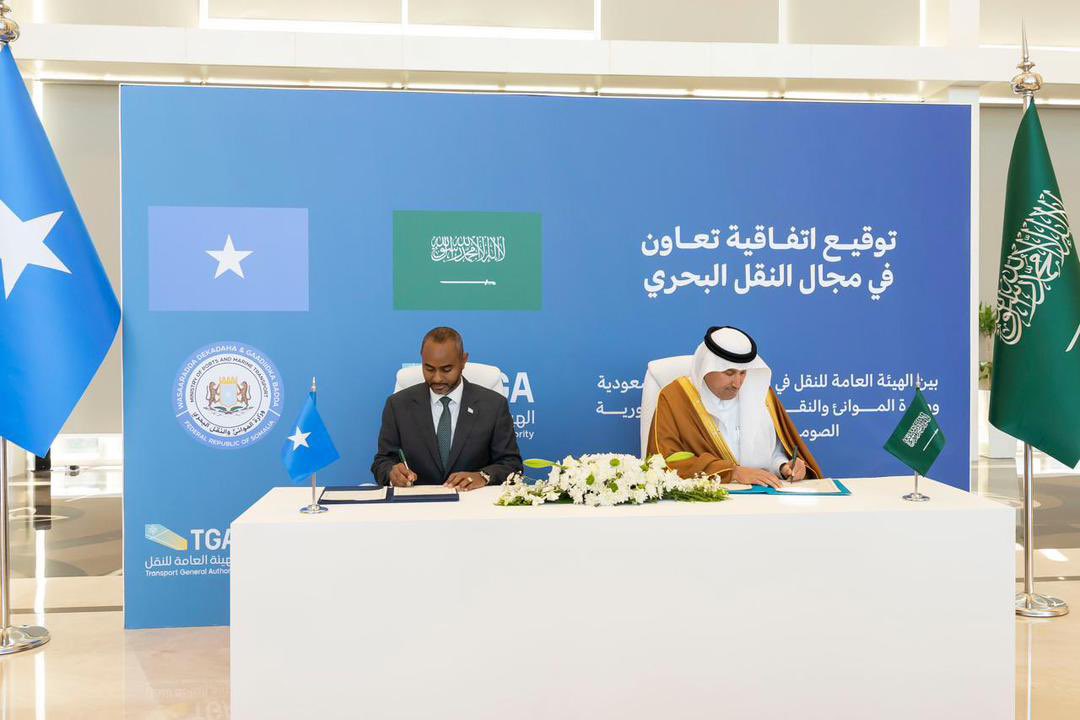
RIYADH, February 20, 2026 – Somalia and Saudi Arabia have signed a comprehensive maritime transport cooperation agreement aimed at strengthening bilateral ties and modernising Somalia’s port and shipping sectors.
The accord was signed in Riyadh by Somalia’s Minister of Ports and Marine Transport, Abdulkadir Mohamed Nur, and Saudi Arabia’s Minister of Transport and Logistics Services, Eng. Saleh bin Nasser Al-Jasser.
Officials said the agreement establishes a formal framework for long term cooperation in maritime transport, port development and logistics, aligning the two countries’ economic and strategic interests.
According to the Somali government, the pact covers collaboration in port infrastructure modernisation, maritime transport services, regulatory alignment and technical knowledge exchange. It also includes provisions for capacity building to enhance the operational efficiency and technical expertise of Somali maritime professionals.
Minister Abdulkadir stated that the partnership reflects deepening fraternal relations between Mogadishu and Riyadh and supports Somalia’s efforts to integrate more effectively into regional and global trade networks.
He added that the agreement reinforces Saudi Arabia’s role as a strategic partner, particularly in safeguarding Somalia’s sovereignty, unity and territorial integrity amid shifting geopolitical dynamics in the Red Sea and Gulf of Aden corridors.
Saudi authorities said the deal seeks to facilitate the passage of commercial vessels and improve operational processes for both passengers and cargo. It also forms part of broader efforts to strengthen international partnerships and promote efficiency and sustainability in the maritime sector.
Somali officials said the treaty is designed to accelerate national economic growth by upgrading port services, improving maritime governance and attracting greater investment into the logistics sector.
The Red Sea and Gulf of Aden maritime corridor is considered one of the world’s most critical trade routes, with increasing regional and global competition heightening its strategic importance.

